
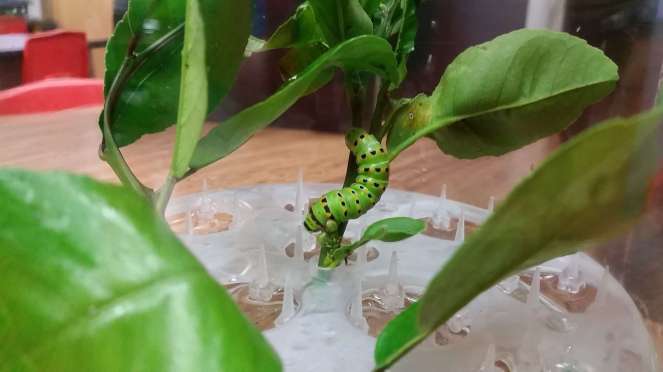
One morning, I found this beautiful, shiny green caterpillar nestled in my little lemon tree. I was headed to work and thought… My students will love to watch this little guy (or girl)! I quickly gathered a clear container, clipped the branch that was now his home, and headed to school (all the while imagining the smiles on my students’ faces).
When I got to school, I placed our new classroom friend on a table surrounded by magnifying glasses and any books or kids’ magazines I could find on caterpillars and butterflies. I also set out scratch paper and drawing materials. As expected, students entered our classroom with smiles of wonder and excitement! One student wondered what kind of butterfly our caterpillar would become. Her question provided me the opportunity to ask the class if we might find that information in fiction or non-fiction text? Students started looking through books to find pictures of our caterpillar. They started sharing their findings and providing opinions to each other. They were asking questions. They were making comparisons, discoveries… They were learning! Even though we were not sure our new friend was the larva of a black swallowtail butterfly, it didn’t matter. In fact, the not knowing became a source of continued wonder for weeks to come.
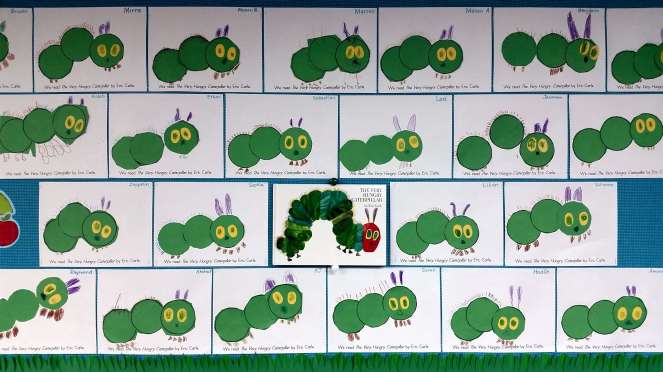
After reading The Very Hungry Caterpillar (by Eric Carle) later in the day, kids made their own paper caterpillars out of green circles, yellow ovals, and crayons. I included the words “We read The Very Hungry Caterpillar by Eric Carle” at the bottom of the background papers. I like to do this when art is connected to something we read in class. That way, parents can ask students questions about the stories we read and perhaps even listen to a retelling or two or three…!
That wonderful, caterpillar day was one of my favorites! Classroom management was easy; In order to spend more time at the “caterpillar table”, students were extra motivated to complete their work. I had not planned to find a cool caterpillar in my yard. Nor did I expect caterpillars to be the topic of the day. I even had to borrow a bit of construction paper for our art project, because I didn’t plan for that either. Even so… It was a joyous day, full of authentic learning.
Not all days will be like this in your classroom. Planning is essential to ensure all students are guided through their learning in a logical process (i.e., learning certain skills before moving on to more difficult challenges). But, if we look for the unexpected and are open to the possible learning outcomes, we can often insert more authentic, hands-on learning for our students — a much more engaging way to learn. We don’t want to be so ridged in “sticking to the plan” that there isn’t space enough to truly answer questions like how?, why?, what if?
 Ms. Morning Joy